
If the idea of baking your own sourdough bread has been calling to you, listen up! Sourdough isn’t just another loaf – it’s an age-old tradition connecting us to generations of bakers and the natural rhythms of the earth itself. Roll up your sleeves and let’s explore how to get started with sourdough bread.
Sourdough Starter
We begin with the starter – a living, breathing companion of flour and water that will capture the wild yeasts and lactic acid bacteria unique to your local environment. For about a week, you’ll patiently discard some of the starter each day before feeding it fresh flour and water. Before you know it, your “pet” will grow into an active, bubbling, pleasantly sour-smelling mixture ready to kick start your bread. It’s easy these days to skip this process if you would prefer to begin with an established sourdough starter instead. You can find our own farmhouse kitchen sourdough starter in our shop.
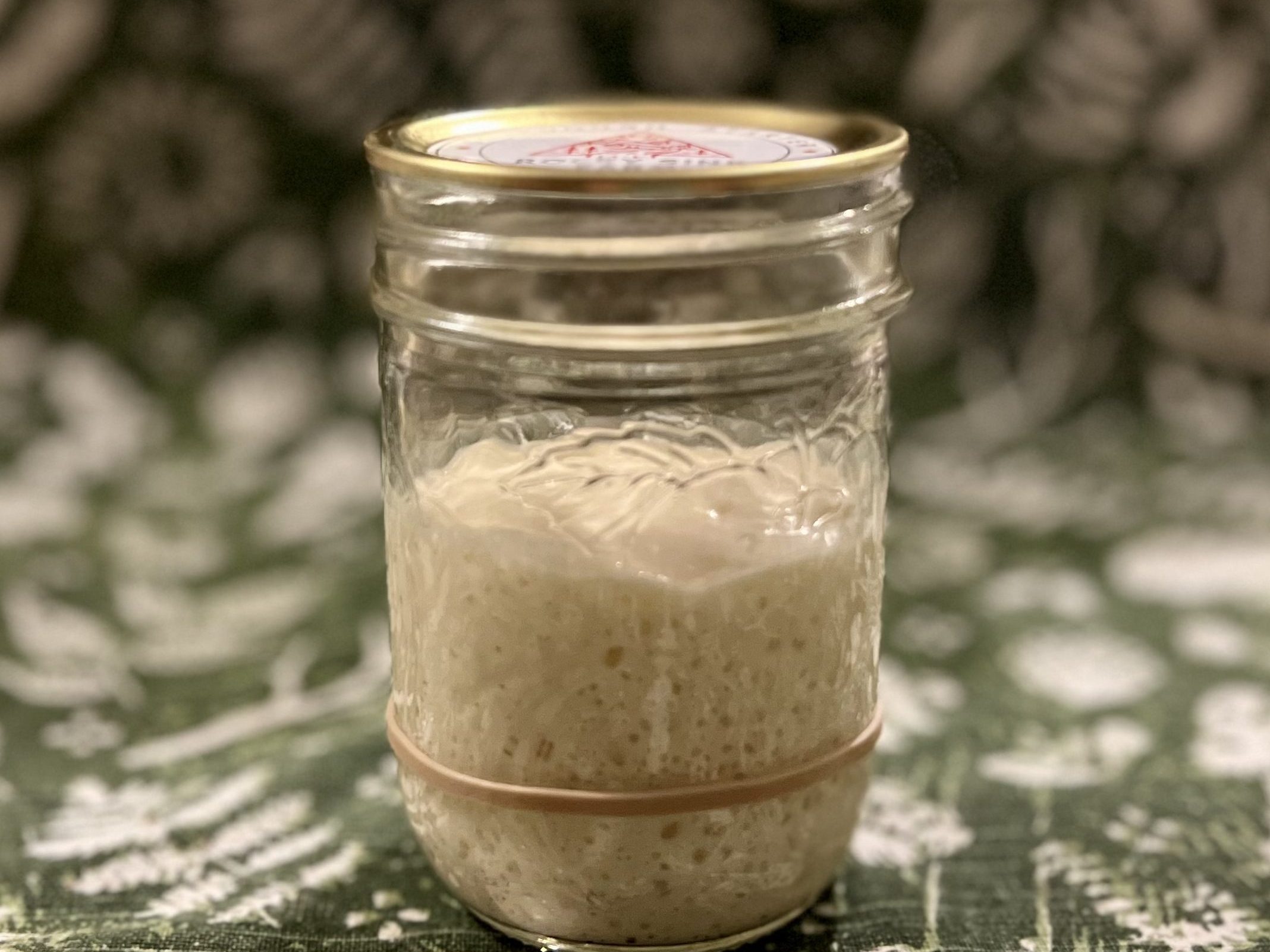
Sourdough Environment and Timing
From there, your sourdough loaves will thrive with a delicate dance of warmth, humidity and time. Yeasted doughs love a cozy 75-80°F zone, so a spot near a sun-soaked window, the oven with just the light on, or periodically draping the dough with a warm towel can provide that nice gentle incubator. And be sure to create a humid micro-climate too by having a pan of hot water in the oven – this will encourage an enviable crunchy, crackly crust.
But sourdough’s biggest secret is slowing down and allowing the dough an extended 24-hour fermentation period before baking. While a conventional loaf may be on the table in just a few hours, sourdough embraces the “long game” of gradually developed, complex flavors and that coveted open, airy crumb structure. Be patient and let the natural wild yeasts work their magic over time.
Equipment and Supplies for Sourdough
As for equipment, you really just need a few basics in the beginning to get started with sourdough: a digital scale to accurately measure ingredients, a bowl and towel for proofing the dough, and a dutch oven or pizza stone to bake on. You can always explore fancier supplies like dough scrapers and lame scoring knives down the road if the sourdough passion intensifies!
Before attempting your first loaf, do soak up plenty of guidance from watching sourdough videos online. There’s no substitute for visually observing the entire process from start to finish – it’s incredibly helpful for learning the stretching and folding actions, shaping techniques, scoring patterns, and more. Seeing it in real-time is invaluable.
Try, Try Again
Then dive in and start baking! View any setbacks or “mistakes” as merely learning lessons to incorporate for your next sourdough session. It may take a few tries to nail the perfect rise, crumb and tang, but that makes savoring your eventual successes all the more rewarding.

For when you do achieve your first light, chewy, deliciously tangy sourdough loaf – oh, what a magnificent feeling! You’ll be transported by the aromas, the crackly crust, the glimpse of those elusive air pockets in the crumb. More than bread, it’s a connection to tradition, an dance with natural fermentation, a patience-building ritual.
So embrace sourdough’s rustic, old-world charms! Find your inner rhythm for folding, proofing and baking. Awaken your senses to the magic of wild yeast and microbes at work. You’ll eventually find your groove and soon be whipping up sourdough like you were born for it.
 Rocky Sink Farm